What KAYA Does Differently
You’ve been there. You spend $60 on a wellness supplement that promises to boost energy, improve focus, and restore vitality. Two months later, you feel nothing. You read the label again. “Pure Himalayan.” “Lab-tested.” “100% authentic.” But was any of it actually true? Probably not.
The global wellness industry is now worth over $5 trillion — and it runs almost entirely on trust. Trust that labels are accurate. Trust that ingredients are what they claim to be. Trust that the person on Instagram endorsing the product actually used it and genuinely believes in it.
That trust is being systematically broken. And most consumers don’t even know it’s happening.
This article breaks down exactly how wellness brand deception works, why it’s so widespread, and how House of Kaya was built from the ground up to fix it.
The Problem: A Wellness Industry Built on Unverifiable Claims
Walk into any health store — physical or digital — and you’ll find shelves stacked with products making bold, specific promises. “Boosts immunity.” “Clinically proven.” “Sourced from pristine Himalayan peaks.” “Zero additives.”
Here’s the uncomfortable truth: most of these claims are never independently verified. The systems supposed to protect you — certifications, lab tests, influencer reviews — are either too slow, too easy to fake, or too financially conflicted to be relied upon.
1. Most “Lab-Tested” Claims Are Meaningless
The phrase “lab-tested” appears on thousands of wellness products. But tested for what? By whom? When? A brand can test one batch, display the results permanently, and reformulate without retesting. Consumers have no way to verify this.
2. Certifications Can Be Gamed
Organic certifications, “natural” labels, and quality seals are often obtained through paperwork rather than rigorous verification. Some certifying bodies are underfunded, understaffed, or corrupt. The badge on the packaging tells you a fee was paid. It doesn’t always tell you the truth.
3. Influencer Reviews Are Paid Opinions
A wellness influencer with 500,000 followers can receive free product, a payment, and a script — then deliver a glowing “honest” review. Even when disclosed as a partnership, the financial relationship fundamentally compromises objectivity.
4. Supply Chains Are Opaque
For products claiming Himalayan origin, “sourcing” claims are almost impossible to verify without deep supply chain transparency. Products can be blended, diluted, or sourced from entirely different regions. Without traceability, the claim is just a word on a label.
The Real Cost of Mistrusting Wellness Products
Beyond wasted money, the consequences of this broken system are significant:
- People with genuine health needs make decisions based on false information
- Authentic small producers — ethical farmers, traditional artisans — lose out to cheaper, deceptive competitors
- Consumer cynicism grows until even legitimate, high-quality products are dismissed
- The knowledge systems behind Ayurveda and Himalayan wellness traditions get cheapened and commodified
The problem isn’t just commercial. It’s cultural and ethical. When a counterfeit product floods the market alongside a carefully sourced, genuine one, the authentic product can’t compete on price alone — and consumers can’t tell the difference.
What KAYA Is — And Why It’s Different
House of Kaya wasn’t built as just another wellness shop. It was built as a direct response to the trust crisis described above.
KAYA describes itself as a “trust-first structure” and a “people-driven validation system.” Most marketplaces care about selling products. KAYA cares about whether the claims attached to those products are actually true — and it has built a structural system to find out.
The Core Idea: Human-Led Validation
Every product on KAYA goes through a two-layer process before and after it reaches consumers:
- Layer 1 — Independent Review: Before a product enters the marketplace, manufacturers are screened for ethical production intent. Claims and documentation are reviewed by domain experts. This establishes eligibility — not approval.
- Layer 2 — Consumer Validation: Real buyers test the product in real-world conditions, respond to specific claim-based questions, and document their experience with evidence — images, videos, written records — submitted for transparent review.
The outcome of every validation is recorded publicly. If claims hold up, trust compounds over time. If they don’t, the failure is visible. Products can — and do — publicly fail validation on KAYA. That commitment to exposing failure, not just celebrating success, is what separates this system from every review platform before it.
KAYA Verified: What It Means (and Doesn’t Mean)
The “KAYA Verified” signal is not a certification and not a legal guarantee. KAYA is transparent about this. What it does mean is that claims have been subjected to layered scrutiny, real consumers have tested whether those claims matched reality, and outcomes are recorded without manipulation.
That honesty about what the signal means — and doesn’t mean — is itself a form of trust. Most brands oversell their credentials. KAYA deliberately undersells its system and lets the evidence speak.
What KAYA Actually Sells: Categories Where Deception Is the Default
KAYA’s current product range spans six active categories, each chosen because they represent spaces where consumer deception is rampant, authentic sourcing is difficult to verify, and the gap between what’s on the label and what’s in the product is large enough to matter.
Here’s what’s available now, why each category has a trust problem, and how KAYA’s validation approach changes the equation.
Himalayan Herbal Teas — Where “Organic” Is the Most Misused Word
Tea is one of the most adulterated product categories in the world. Mislabeled botanical species, false organic certifications, added fillers, and fabricated origin claims are standard practice at the lower and mid end of the market. A product sold as “Himalayan herbal tea” may contain herbs sourced from industrial farms with no connection to the region whatsoever.
KAYA’s tea range is built around real botanical identity and traceable sourcing. Every tea in the active catalogue has documented ingredient provenance, with validators testing for the claims that actually matter: flavour accuracy, aroma integrity, potency, and the absence of additives. What you see on the label is what’s in the cup.
Active teas available now include: Butterfly Pea Flower (Blue Tea, $10.99) — a deep blue caffeine-free infusion rich in anthocyanins that famously changes colour to purple when citrus is added; Roselle Tea ($13) — a ruby-red hibiscus infusion with well-documented cardiovascular and antioxidant support; Tulsi Tea ($15) and Tulsi Leaf sachets ($12.99) — holy basil, one of Ayurveda’s most revered adaptogens; Lemongrass Ginger Tea ($11) — a warming digestive blend with clinically studied anti-inflammatory compounds; Turmeric Ginger Lemongrass Tea ($12) — a layered anti-inflammatory blend; Green Tea ($13) — high-catechin Camellia sinensis for metabolic and cognitive support; and Black Tea ($11) — fully oxidised Camellia sinensis, rich in theaflavins. Explore the full tea range.
Essential Oils — An Unregulated Category Where “Pure” Means Almost Nothing
The term “pure essential oil” is unregulated in most global markets. Oils are routinely extended with carrier oils, adulterated with synthetic fragrance compounds, or produced via solvent extraction and sold as steam-distilled. Claimed botanical origins — lavender from Provence, cedarwood from the Himalayas, rosewood from the Amazon — are frequently unverifiable without independent chemical analysis.
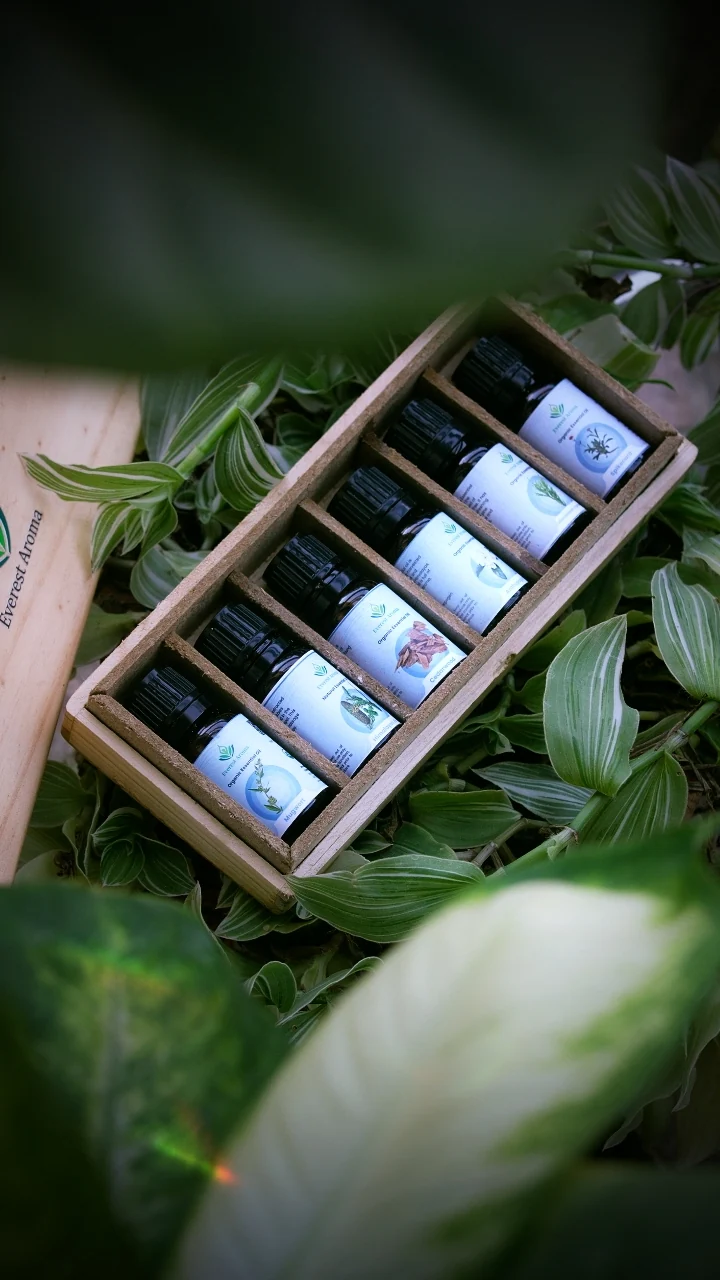
The Himalayan Bio Kit ($99) is KAYA’s most rigorously sourced product and the first in the catalogue to carry the KAYA Verified signal. It contains six wild-harvested essential oils steam-distilled from high-altitude Himalayan botanicals collected between 2,700 and 5,700 metres above sea level: Anthopogon (rhododendron), Spikenard (jatamansi), Himalayan Fir (abies), Mugwort (artemisia), Cedarwood, and Himalayan Cypress. These are not commodity oils — they are rare, altitude-specific botanicals with documented terpene profiles and centuries of use in Nepali folk medicine, Tibetan healing, and Ayurvedic tradition. The kit has been independently validated through KAYA’s system.
Also available: the Sleep Bless Blend ($35) — a professionally formulated aromatherapy blend of chamomile, valerian, calamus, wintergreen, juniper berry, and citronella essential oils, specifically developed for sleep quality support; and the Oral Care Kit ($35) — a set of six antimicrobial essential oils including peppermint, clove bud, artemisia, cinnamon tamala, zanthoxylum, and black cardamom, used for natural oral hygiene. Shop essential oils.
Cold-Pressed Carrier Oils — Freshly Pressed in Kathmandu, Single-Ingredient
Carrier oils are among the most frequently adulterated products in the natural beauty and wellness market. Blending with cheaper oils, solvent extraction passed off as cold-pressing, and mislabeled purity grades are all common. Most consumers have no way to detect the difference until they notice the product doesn’t behave as expected on their skin or in their formulations.
KAYA’s carrier oil range is built on a single principle: one ingredient, freshly cold-pressed, unfiltered, unrefined, non-hydrogenated. All five oils in the active catalogue are pressed in Kathmandu from single botanical sources with no additives. Sweet Almond Oil ($17.20, Prunus amygdalus dulcis) — a top-rated emollient and carrier oil; Hemp Seed Oil ($6.80, Cannabis sativa) — rich in gamma-linolenic acid, ideal for oily and acne-prone skin; Dhatelo Seed Oil ($15, Prinsepia utilis) — a rare Himalayan botanical oil with skin-nourishing, photo-protective, and anti-wrinkle properties; Black Cumin Seed Oil ($7.80, Nigella sativa) — containing thymoquinone and phytosterols with multi-system health support; and Apricot Kernel Oil ($17, Prunus armeniaca) — a lightweight emollient that promotes skin softness and cellular regeneration. Browse carrier oils.
Skincare — Himalayan Botanicals, No Harmful Chemicals
The natural skincare market is saturated with products that use the language of nature while containing synthetic preservatives, cheap filler oils, and artificial fragrance. “Natural” and “clean” are marketing terms with no legal definition in most markets.
KAYA’s active skincare range consists of three products, each formulated with traceable botanical ingredients and validated through real use. The Above & Beyond Facial Oil ($22.40) is a wildcrafted blend of six cold-pressed oils — apricot kernel, walnut, dhatelo seed, sweet almond, pumpkin seed, and black cumin — plus a complex essential oil blend of orange, anthopogon, cedarwood, lavender, zedoary, black cardamom, and artemisia. It is formulated specifically for anti-aging, dry skin, and harsh-climate skin repair.
The Flower of Life Cleansing Balm ($28.13) uses wild Himalayan beeswax as its base, alongside cold-pressed rice bran oil, virgin coconut oil, sunflower seed oil, and vitamin E. It functions as a first-step cleanser that converts to oil on contact, dissolving makeup without stripping the skin. A surfactant derived from olive oil ensures it rinses clean without a second cleanse being mandatory.
The Third Eye Hair Oil ($22.40) is an Ayurvedic scalp blend drawing on cold-pressed castor, pumpkin seed, black cumin, hemp seed, apricot kernel, garden cress seed, and dhatelo oils, slow-infused with aged ginger root, amala powder, and shikakai pods, plus an essential oil blend of zedoary, thyme, rosemary, cedarwood, and rosewood. It targets hair fall, scalp health, and stimulation of new growth through compounds with documented scientific backing. Shop skincare.
Natural Fibre Apparel — Where the Word “Cashmere” Has Been Cheapened
The fashion industry has largely destroyed the meaning of the word “cashmere.” Products labeled as cashmere routinely contain blended synthetics, low-grade fibres from different animals, or coarse outer-coat fibres that don’t meet the micron standards of genuine cashmere. Mislabeled fibre weights and false origin claims are standard practice at mid-market price points.
KAYA’s apparel range currently features seven active pieces, each with documented fibre composition and validated through real-world wear. The Women’s Cashmere Blend V-Neck Sweater ($72.49) is crafted from a silk-cashmere blend in Brown, Blue, and Red, available in Small through Large. The Women’s Structured Lambswool Polo Neck Sleeveless Sweater ($42.99) is a 65% lambswool and 35% nylon construction with heavy knit weight and clean modern silhouette. The Women’s Cotton Blend Sleeveless Tank Top ($56.49) uses 68% organic cotton, 25% recycled polyamide, and 7% polyamide across four colour options. The Women’s Cotton Halter Neck Tank Top ($43.49) is 100% cotton in Black and White. The Women’s Poncho ($70.99) is 68% organic cotton, 25% recycled polyamide, and 7% polyamide in five colours. The Women’s Silk Blend V-Neck Long Sleeve Top ($49.49) is 75% silk and 25% cotton. The Mustang Cashmere ($50) is sourced from the Mustang region of Nepal, hand-harvested from goats raised at high altitude.
KAYA’s validation process for apparel targets the claims most commonly falsified: fibre composition accuracy, softness consistency, pilling resistance over time, and care instruction accuracy. Browse apparel.
Curated Tea Gift Boxes — Premium Himalayan Tea Collections
KAYA offers three curated gift box collections, each presenting premium Himalayan teas in beautifully designed packaging. The 3 Jar Gift Box With Handle ($35) contains Tulsi (holy basil, 20g), Roselle hibiscus flower (20g), and Lemongrass Ginger (60g) — all certified organic and caffeine-free, presented in gold-rimmed round tins in a signature green-and-gold box. The 3 Jar Floral Gift Box ($45) contains Butterfly Pea Flower Blue Tea (10g), Golden Tea from premium Himalayan tea buds (30g), and Roselle hibiscus (15g) — presented in glass jars in a botanical floral box, offering a journey through deep blue, rich gold, and vibrant ruby. The 4 Jar Gift Box ($45) contains Hibiscus (10g), Blue Tea (10g), Lemongrass Ginger (40g), and Tulsi (15g) — all caffeine-free and certified organic in premium glass jars with gold lids. Each collection is fully certified organic with no artificial additives. Shop gift boxes.
The Validator Program: Trust Built by Real People
KAYA’s validators are not influencers. They are end consumers performing a public trust function. This distinction is fundamental to how the system works.
Validators on KAYA:
- Receive products to test in real-world conditions
- Respond to specific claim-based questions — not open-ended opinion prompts
- Submit documented proof of their experience (images, video, written records)
- Have their validated reviews published transparently
- Earn a percentage of revenue from products they validate
The incentive structure is designed carefully. Validators earn from validated sales — but their compensation is tied to transparency, not to positive outcomes. A validator who honestly documents that a product failed to deliver its claims is fulfilling the system correctly. This is the opposite of sponsored content.
Interested in contributing to a more honest wellness marketplace? Learn about becoming a KAYA Validator.
Why This Matters Now More Than Ever
The timing of KAYA’s approach is not accidental. Consumer trust in brands is at a historic low. Research consistently shows that people trust peer recommendations far more than brand marketing — but peer recommendations have been corrupted by influencer culture.
At the same time, demand for authentic Himalayan and Ayurvedic products is genuinely growing. People want teas that actually contain what the label says. They want skincare made from real botanicals, not synthetic approximations. They want apparel with accurate fibre composition. The demand is real. The problem is supply chains and marketing that can’t be trusted.
KAYA sits at this exact intersection: real products, real validation, real transparency. The Manufacturer-to-Consumer (M2C) model removes the layers of middlemen that traditionally create room for deception. Direct sourcing, documented validation, public outcomes.
Frequently Asked Questions
Can wellness brands really fake “lab-tested” claims?
Yes. There is no universal standard requiring ongoing, independent, third-party lab testing for wellness products in most markets. A brand can test a single batch, publish the results, and use that claim indefinitely — even if subsequent batches differ. Without supply chain traceability and continuous testing, the claim is largely unverifiable by consumers.
What makes KAYA different from review sites like Trustpilot or Amazon reviews?
Review platforms collect opinions. KAYA collects documented evidence of claim-specific testing. A KAYA validator doesn’t rate their general satisfaction — they answer whether the specific claims a manufacturer made about a product were true in real-world use. The evidence is documented, structured, and transparent. Products can publicly fail. That’s structurally impossible on most review platforms, where brands can suppress negative reviews or flood the system with positive ones.
Is “KAYA Verified” the same as an official certification?
No — and KAYA is explicit about this. “KAYA Verified” is a trust signal, not a legal or scientific certification. It means that specific product claims have been subjected to layered validation, real consumers have tested them, and the outcomes — positive or negative — are on record. KAYA does not guarantee results or protect brands from failure.
What kinds of products does KAYA currently carry?
KAYA’s active catalogue spans six categories: Himalayan herbal teas (Butterfly Pea Flower, Roselle, Tulsi, Lemongrass Ginger, Turmeric Ginger Lemongrass, Green Tea, Black Tea), essential oil kits (Himalayan Bio Kit, Sleep Bless Blend, Oral Care Kit), cold-pressed carrier oils (Sweet Almond, Hemp Seed, Dhatelo, Black Cumin, Apricot Kernel), natural skincare (Above & Beyond Facial Oil, Flower of Life Cleansing Balm, Third Eye Hair Oil), natural fibre apparel (cashmere blends, silk blends, organic cotton), and curated tea gift boxes. All active products have been curated for ethical production and traceable sourcing.
How can I shop with confidence on KAYA?
Every product on KAYA that carries the KAYA Verified signal has been tested by real consumers who documented their experience against specific product claims. Validation records are publicly visible. You can also read validator reviews or explore the comparison guides to make informed decisions before purchasing.
The Bottom Line
The wellness industry has a trust problem — and it’s not going away on its own. As long as deceptive claims are profitable and unverifiable, they will continue. The solution isn’t more certifications or more influencers. It’s a structural system where truth is documented, failure is visible, and validation is tied to real use rather than financial incentive.
That’s what House of Kaya is building. Not a perfect system — they’re transparent about its limits — but an honest one. One where the question “does this actually do what it claims?” has a documented, public answer.
For consumers who are tired of being misled, that’s not a small thing. Explore KAYA’s validated products — and shop with confidence for the first time.